THE STORY OF A CAMEL
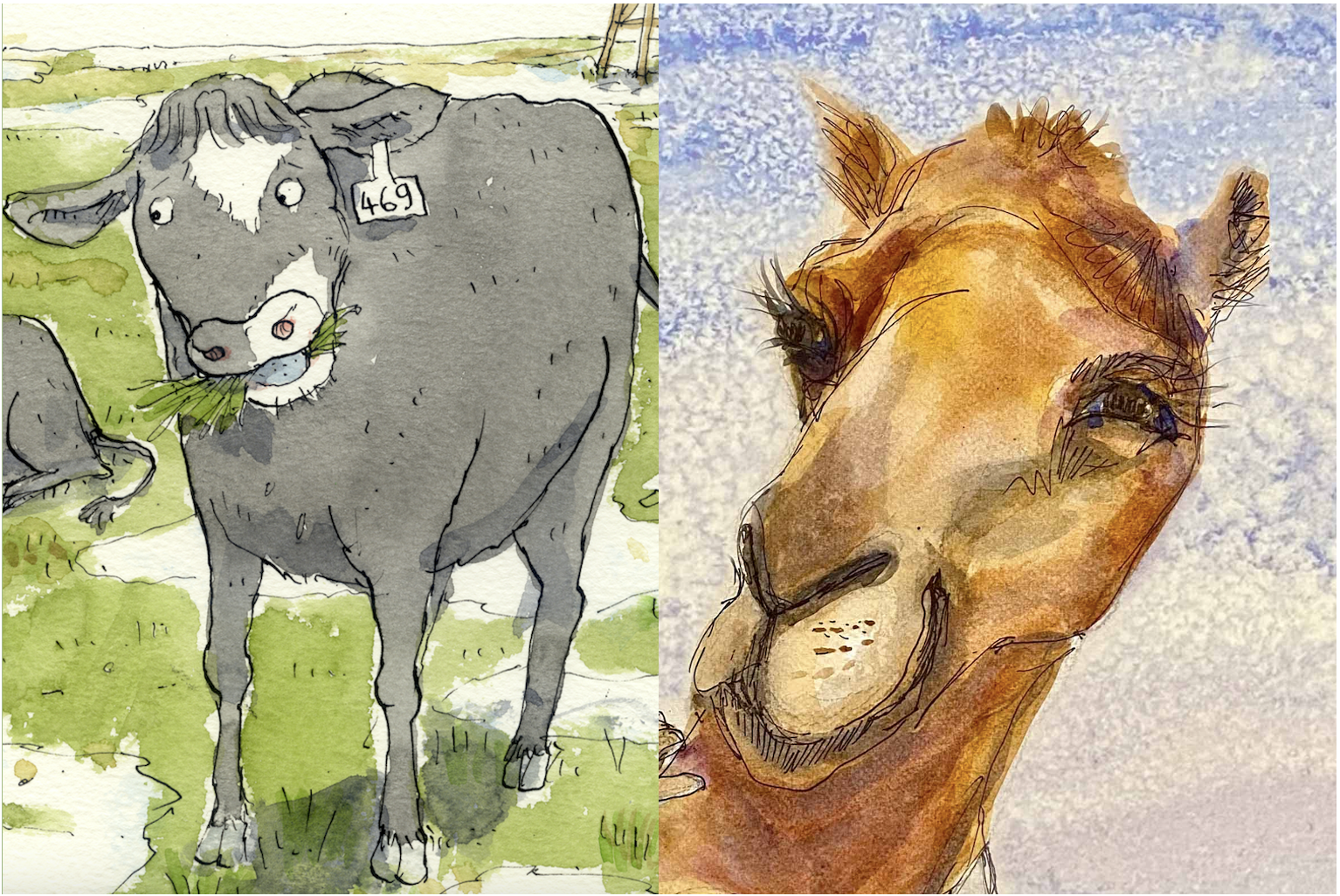
I didn’t recognize it while it was happening, but here I am now, the author of two children’s picture books whose main characters feature ungulates. How did this happen?
It took sixteen years for me to write THE MOLLYS B., my picture book biography about a heifer fleeing a Montana abattoir, but that was all subconscious writing because when that story fell into my lap, it arrived nearly complete. And in the two years it took for me to get it ready for publication, it went through twelve drafts. It was heaven-sent. And made of magic.
Neville, perhaps the embodiment of his dromedary personality, gave me a lot more trouble. It took twenty-eight drafts to get his story right. How did this goofy, gangly, tenderhearted camel galumph his way into my life?
I have always liked camels, even though I don’t know the first thing about them. In fact, I’m not sure I’ve ever seen one in real life; maybe a zoo somewhere? I don’t know. I think they’re funny, odd, grumpy, stoic, maybe a little British with their stiff upper lips? I do not know where he came from, but Neville first walked onto the page in 2019.
This was during a time when I was an active member in Julie Hedlund’s 12 x12 Writing Challenge, my absolute favorite learning forum. Grounded in the honor system, the goal for members was (and still is) to write a fresh picture book manuscript each month. So, the creative neurons were always firing; ideas were around every corner, in every cloud formation, every dust bunny, and every misshapen cookie. As students we were encouraged to be on the lookout for all possibilities for story content that would hopefully be of interest and delight to children. Since I really like animals, I was writing a lot of manuscripts that featured them as main characters, even though, believe it or not, publishers were not enamored with anthropomorphic stories, a trend that had started a good decade prior. The odds of my being able to sell a story featuring talking animals were slim. But I couldn’t help myself.
The way Neville presented himself to me was as an over-sized, clumsy, puppy; loving and sweet natured, he was also a bit of a mischief-maker and prone to temper tantrums. I sensed he was going to be a little stubborn, but charmingly so, and before I got to know him, I also hoped he would be a deep thinker because I wanted to have an excuse to use the word “ruminate” in the manuscript that I hoped to link to his cud-chewing. He also started out as nearsighted, and in the early drafts I worked hard to use that as the premise of the story—as in—that although nearsighted, he was unable to see what was right in front of him (i.e. an owner who loved and cared for him). And because as picture book authors, we are told over and over again to leave room for the illustrator, the first drafts were filled with subtle inferences. I did provide some art notes, but mostly I hinted and left big vague spaces that I thought an agent or editor would be able to surmise for themselves and that in time, an illustrator would be able to fill in. Additionally, the story’s original title - “Neville the Nearsighted Camel” - consisted of four words I thoughtfully—deliberately—selected for their alliterative and rollicking rhythm.
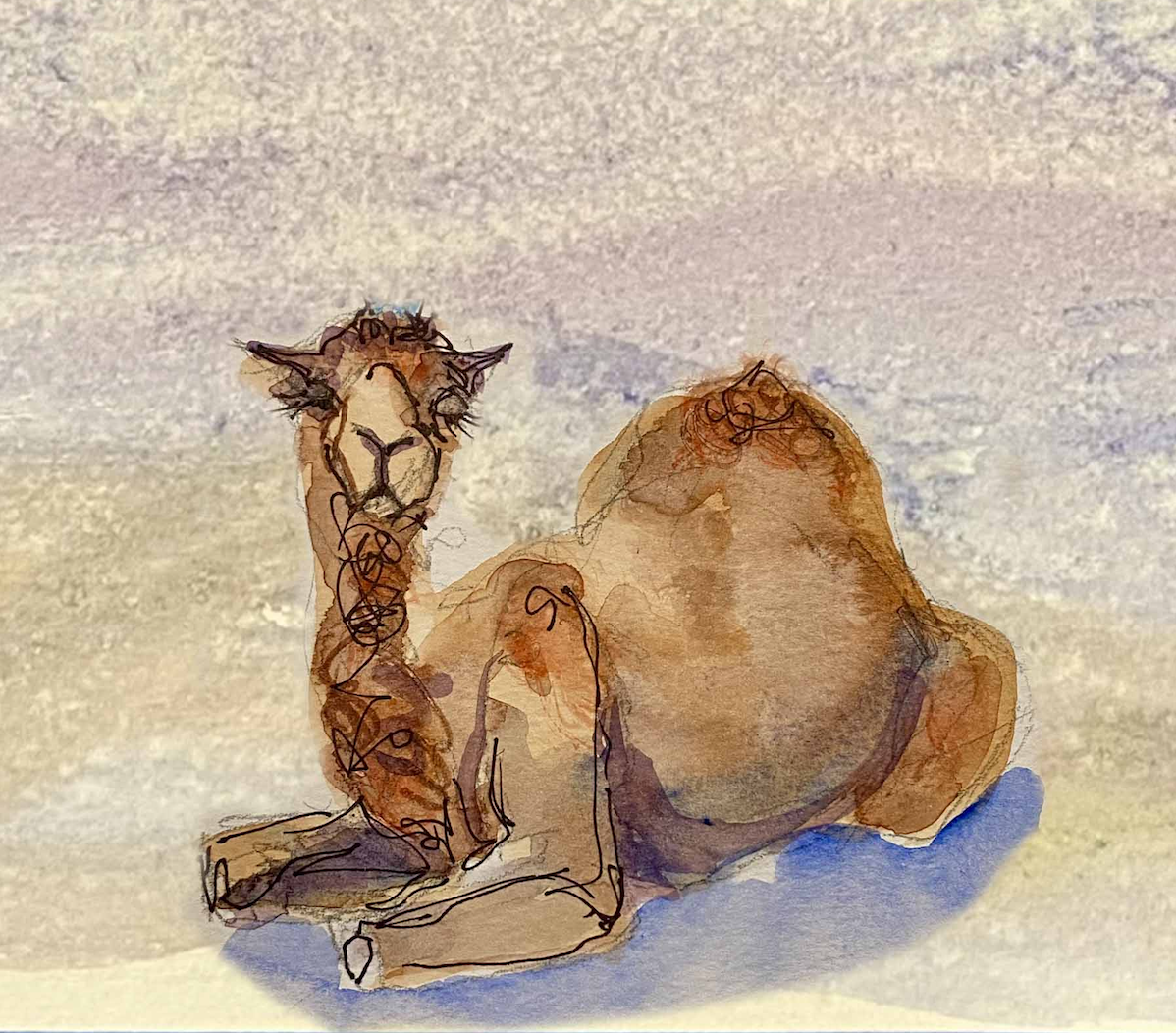
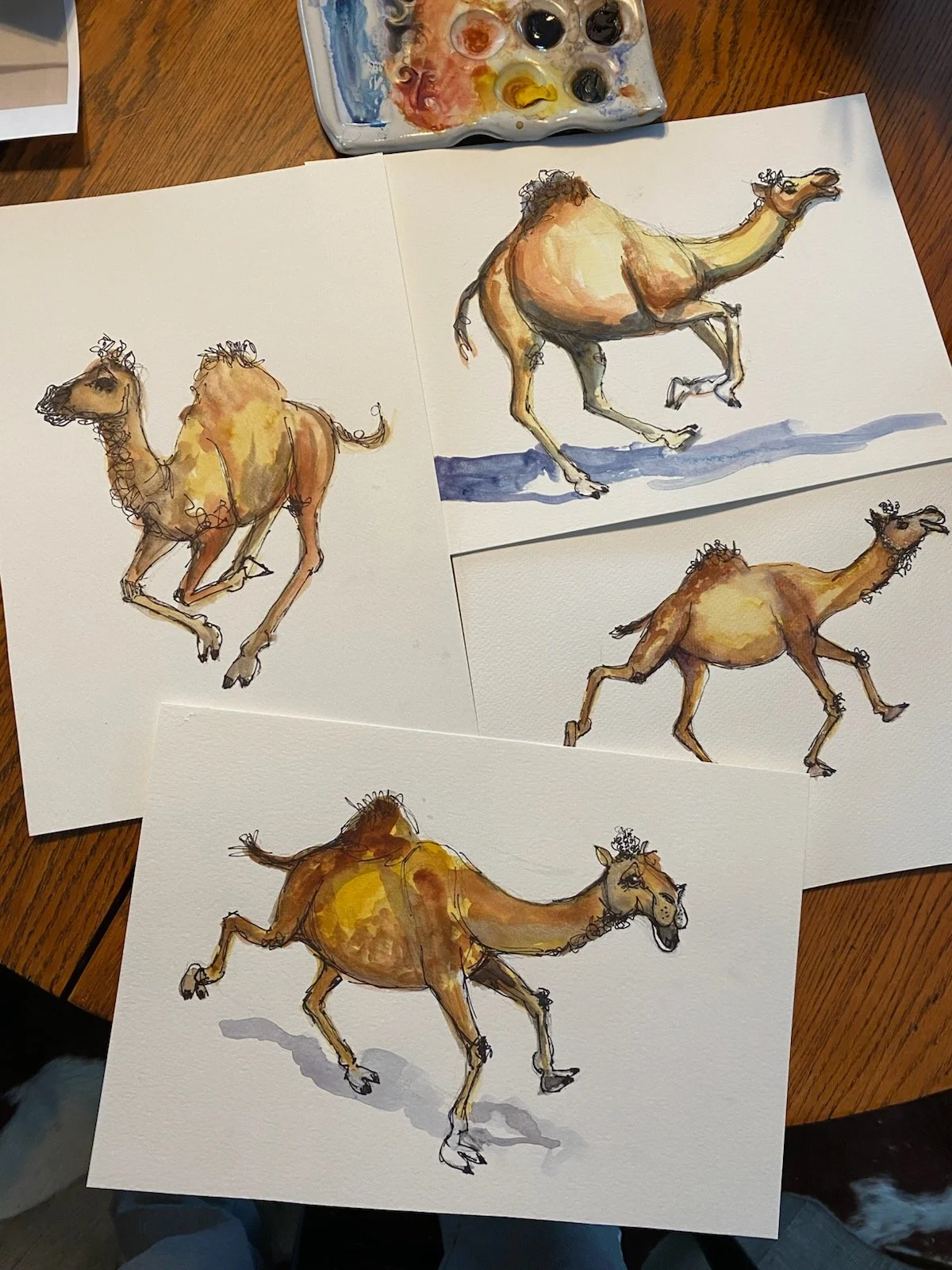
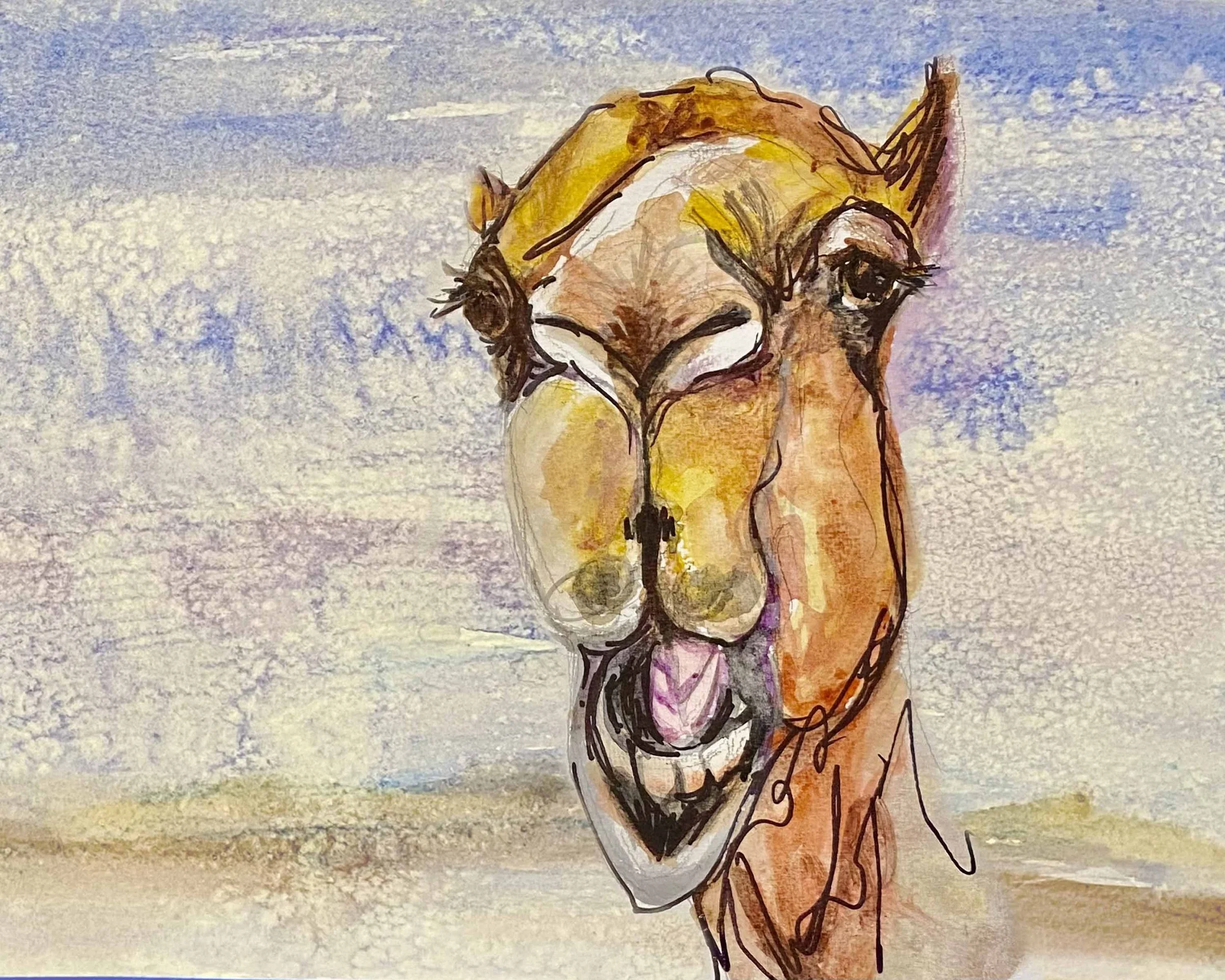
I worked on this manuscript for a year. It was in its tenth draft when I started sharing it with my critique partners. I was juggling three groups at this time, a total of seventeen writers, and the feedback I received was all over the place. Turns out that the majority of my critique partners didn’t “get it.” The innuendos that I thought were so clever fell flat; people objected to the title, declaring that I was drawing attention to a disability; the plot wasn’t tight enough; the inciting incident didn’t have enough punch to support the ensuing action; the story arc was flimsy; Neville’s character wasn’t developed enough to defend his actions; on and on.
No one could see my vision. I was discouraged, but this is the life of a writer. So, I rolled up my sleeves and got back to it; rewriting—not revising—rewriting. I analyzed the arc, I played with different ways to get the inciting incident to “incite,” I experimented with different POVs, I added sections utilizing “the rule of three” in words and stanzas, I played with alliteration, I tightened up passages, I pulled out characters (besides Neville’s side kick, Beetle, the story originally included a snake and a goat), I took dialogue away from one character and gave it to another or eliminated it entirely – I rewrote and rewrote . . . and rewrote.
Five, six, seven, eight? drafts later, I sent revisions to my critique partners. It was 2021, and we were now deep into the days of COVID. Things were weird, remember? Life as we knew it had been put on ice, and we were adjusting to a new model of existence. Still in shock, most of us were in really bad moods. Again, my critique partners had trouble warming up to this story in its newest package. The comments and suggestions were different this time, but I still wasn’t convincing anyone. And this is when, as a writer, you begin to wonder if your manuscript isn’t truly a story after all but rather a cobbled together mess of ideas that you’re forcing to live with one another. Disheartened because Neville had really wormed his way into my heart by now, it seemed that the file cabinet was destined to become his next home, and with it the acceptance that some stories just don’t get to be told.
Meanwhile, I was serving as the ARA for the Montana Chapter of the SCBWI, and via an online conference was given the opportunity for a professional critique from author Kat Zhang. She saved Neville from the dust and neglect of the file cabinet. She recognized the positives in the story; she “got” my inferences, she recognized the story’s concept, she liked the language, she complimented my skills as a writer. Of course, she identified its weaknesses as well, giving me tangible suggestions on how to fix them. And even though she understood how the title mirrored the story’s theme via intimation, she attempted to help me see that it wasn’t doing me any favors. It was too subtle, too open to interpretation. Parents might get it, but kids surely would not. Her critique was the encouragement I needed to keep going, so with hope now for this goofy camel, I jumped feet first into revisions. Later that year, I felt that the manuscript was finally strong enough that I could start querying agents. I also entered it in the Writer’s Digest 90th Annual Writing Competition on a whim. Draft #19. New title: NEVILLE – THE SHORTSIGHTED CAMEL. Yes (big sigh), like Neville, I’m a bit stubborn.
Even though the story had won an honorable mention from Writer’s Digest, the attention afforded no traction, and three and a half years later I was still sending queries out to agents and small publishers. I had also received a few more professional critiques so had been periodically tweaking and editing the manuscript but was reluctant to change very much. I knew deep down the story had integrity. I just needed someone to recognize its value and champion it. Also, somewhere during that time, I finally found the perfect title—one that resonated with what I had been trying so desperately to be clever about with my veiled nuances and hints, one that all along my heart had been quietly waiting for me to recognize: Neville didn’t have to search for his oasis because he was already living in his, he just didn’t know it.
Now titled NEVILLE’S OASIS, I had a fantastic opportunity in 2024 for yet another professional critique—this time, by former editor with Simon & Schuster, Sarah Jane Abbott. Her feedback regarding the details of the manuscript and construction of the plot was thoughtful and validating, but what I appreciated most was the time she took to reassure me I had indeed crafted a story that children would enjoy. Just like Kat Zhang had done three years prior, Ms. Abbott propped me up when I most needed it. Those thirty rejections from agents and small publishers that I had acquired in the preceding three years floated away like ash on the wind.
I found myself in a quandary, though. Sensing that traditional publishing was not going to happen for me, I had pretty much given up on snagging the interest of an agent or editor for any of my manuscripts. I had watched, with an unbecoming green complexion, from the sidelines as a couple of my critique partners managed to land agents and publishing contracts; bittersweet was the realization and acceptance that being traditionally published was never going to happen for me, and so I had, just months previously, committed myself to pursuing self-publishing. So, while Ms. Abbott’s critique lifted me up emotionally and renewed my faith in Neville, I was simultaneously busy with hybrid-publisher, Blue Balloon Books, getting THE MOLLYS B. ready for publication. I had to set Neville and Beetle aside, which I did for nearly two years.
And here’s the interesting thing about the long game of writing, something all writers know, but can be too stubborn (ahem . . .) to acknowledge—by giving myself enough time and space to step back from this project, I saw the story with new perspective when I was in a position to embrace it again. Distance had invoked clarity. Finally! I was able to see what others had been trying to tell me. And finally, I was able to put the finishing touches on this manuscript about a camel.
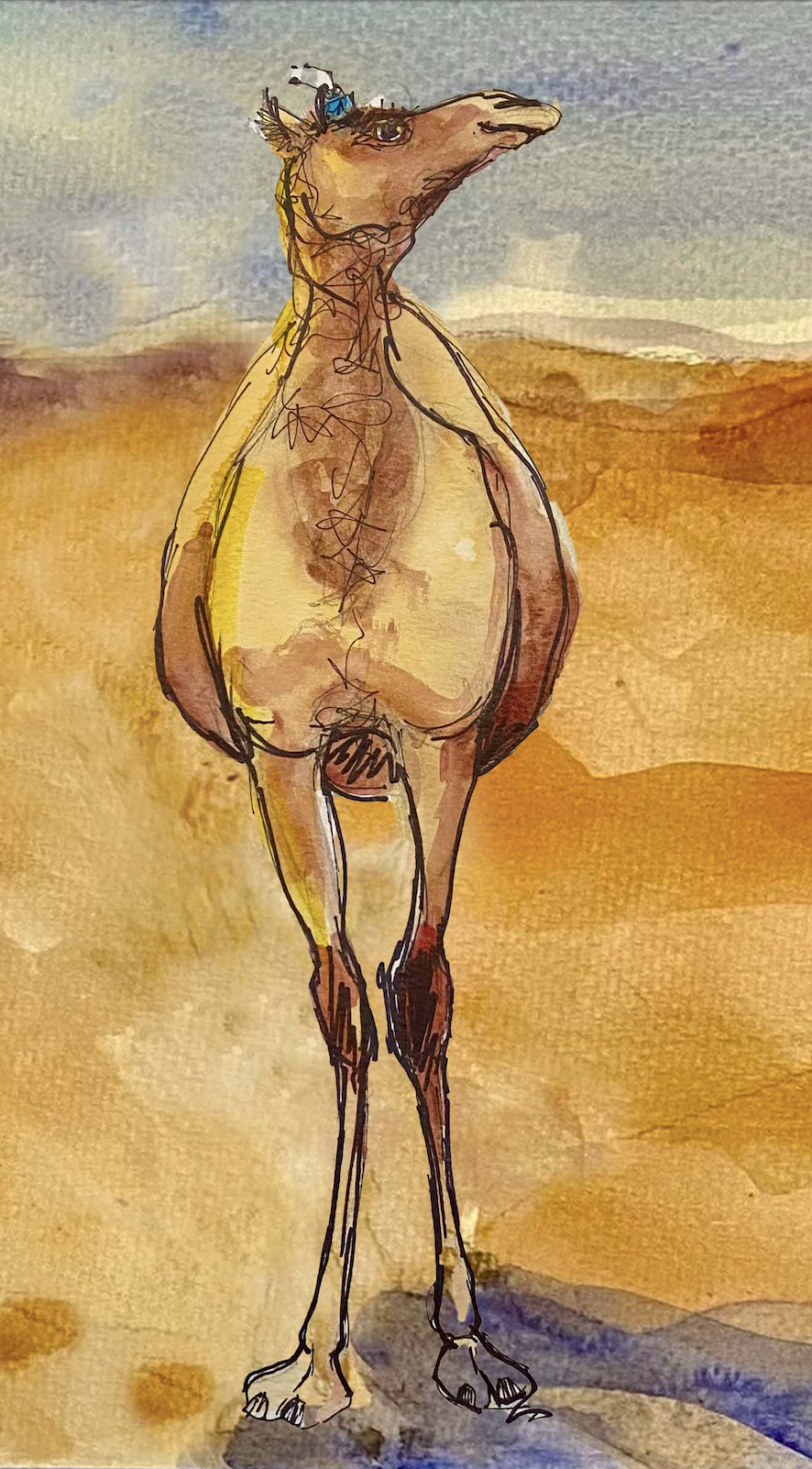
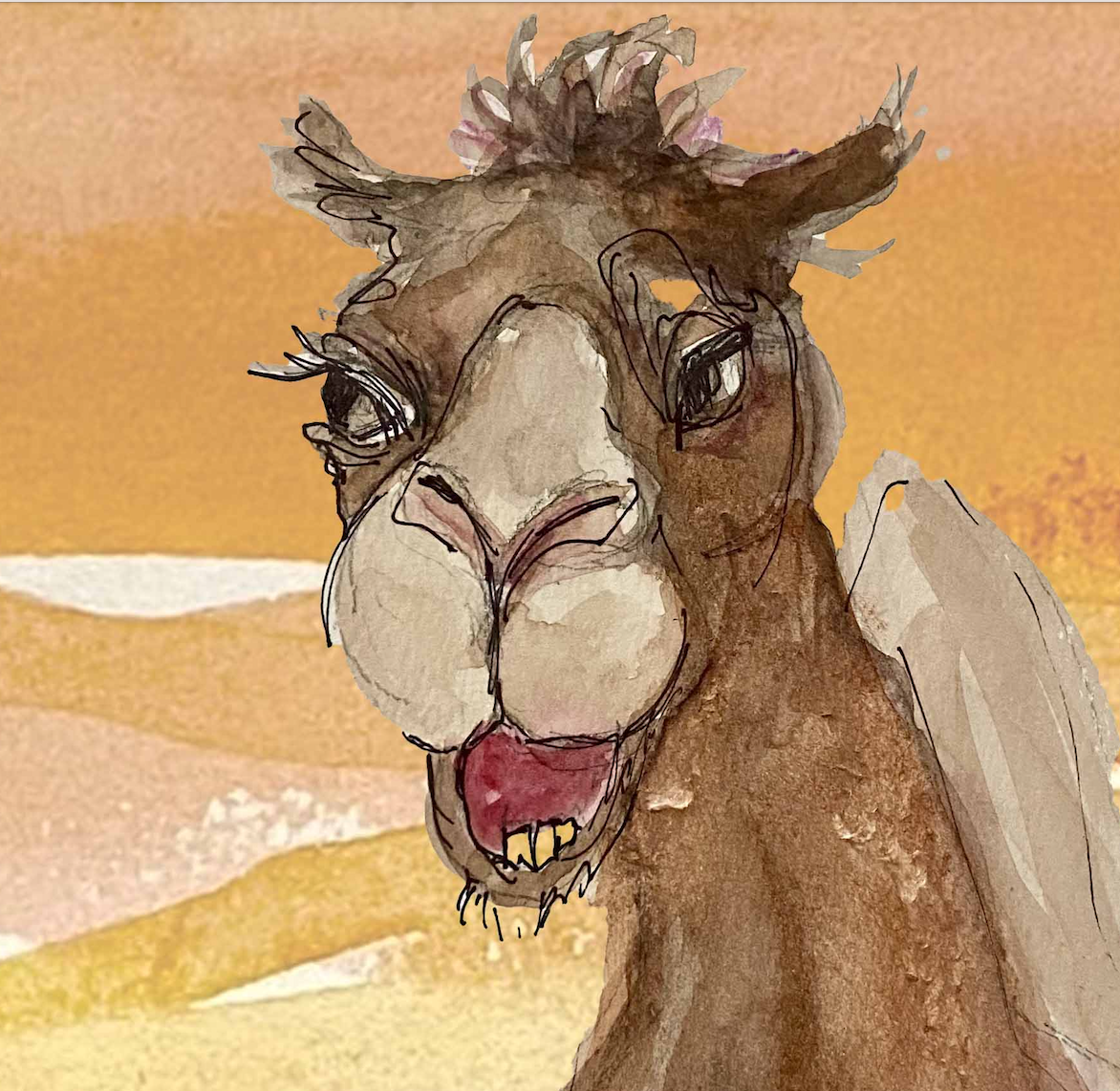
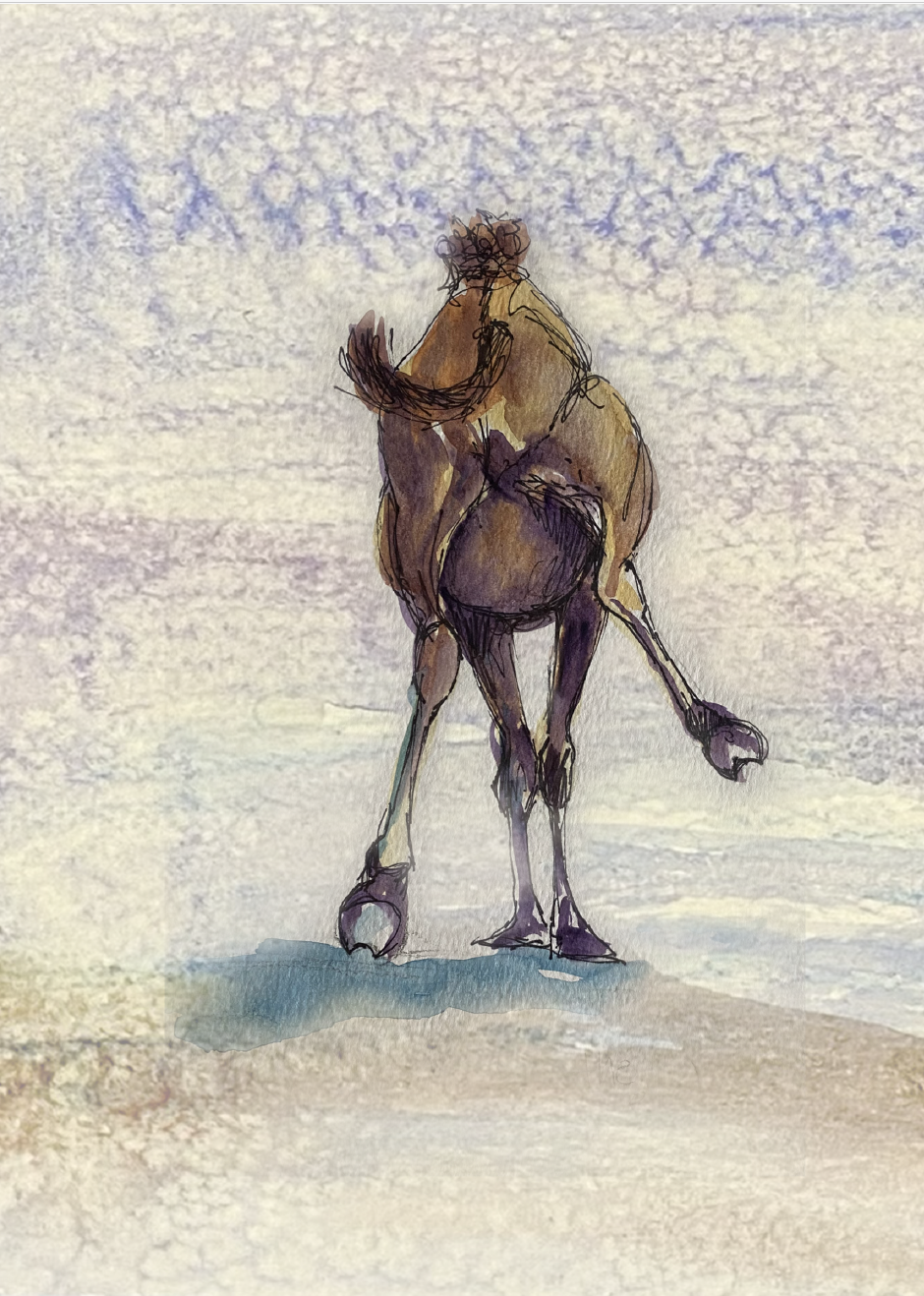
Twenty-eight drafts later, with the assistance of Blue Balloon Books, Neville is primed for the limelight. Getting him ready has been “a less than straightforward journey” just like his search for the oasis, but I see now that that had much more to do with me than him. Envision the bumper sticker we’ve all seen that shows the image of a dog and the words, “Who Rescued Who?” That’s us – Neville and me. I now know the reason he galumphed his way into my life—he was sent to mentor me, for I have learned more from the experience of writing his story than I can possibly put into words.
Arriving August 4th!
**Images are original watercolors by Neville’s illustrator Ann Patterson Bishop