What Can I say?
I have this thing for ungulates . . .
Ungulates. What are they? They are a large family of mammals with hooves (basically, a modified toenail made of keratin). There are 286 species in the world – the smaller group are odd-toed—think horses, zebras, rhinos, and tapirs. The largest percentage of ungulates are even-toed animals—think deer, cattle, goats, giraffes, hippos, pigs, and camels. I’m not kidding – these guys, all of them, are really fascinating. Because I’ve written two picture books now that feature ungulates, I have had to pursue lots of research – some of it, I admit, has resulted in “down the rabbit hole” diversions. But all in all, the more I have learned about the two types of this species, the more I have grown to appreciate them. It's been truly distracting! For the sake of this blog, however, I promise to stay focused.
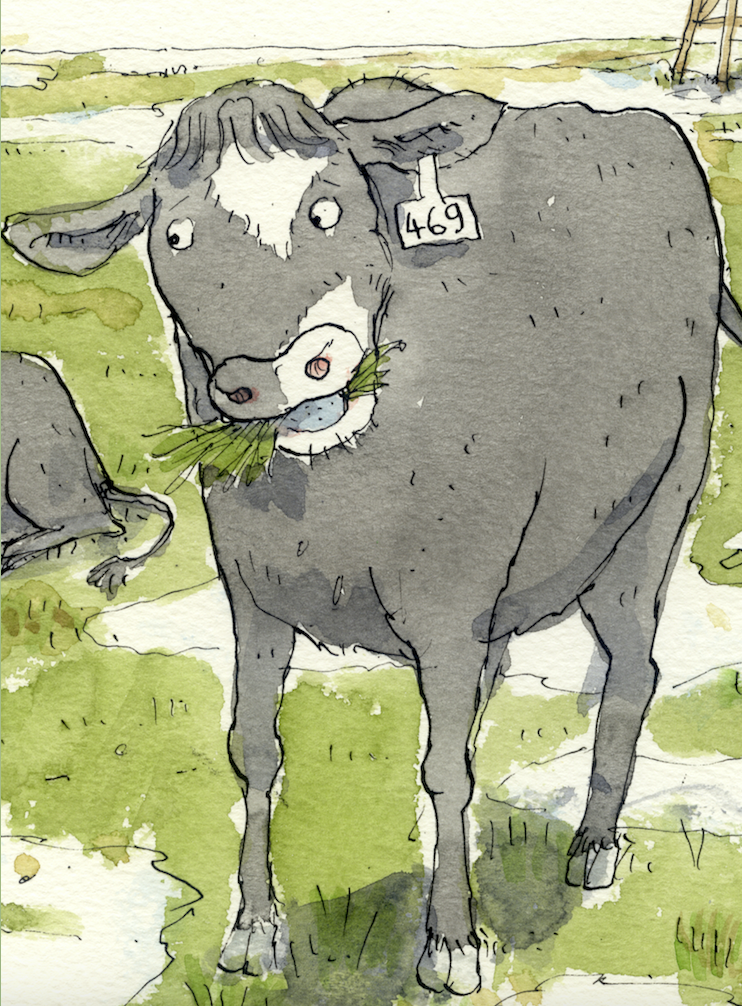
Molly, one of the stars of my picture book biography, THE MOLLYS B., is a Brockle-face Aberdeen Angus. A heifer her age in prime condition can weigh about 1400 pounds and stand from 4.5 to 5.5 feet tall at the shoulder.
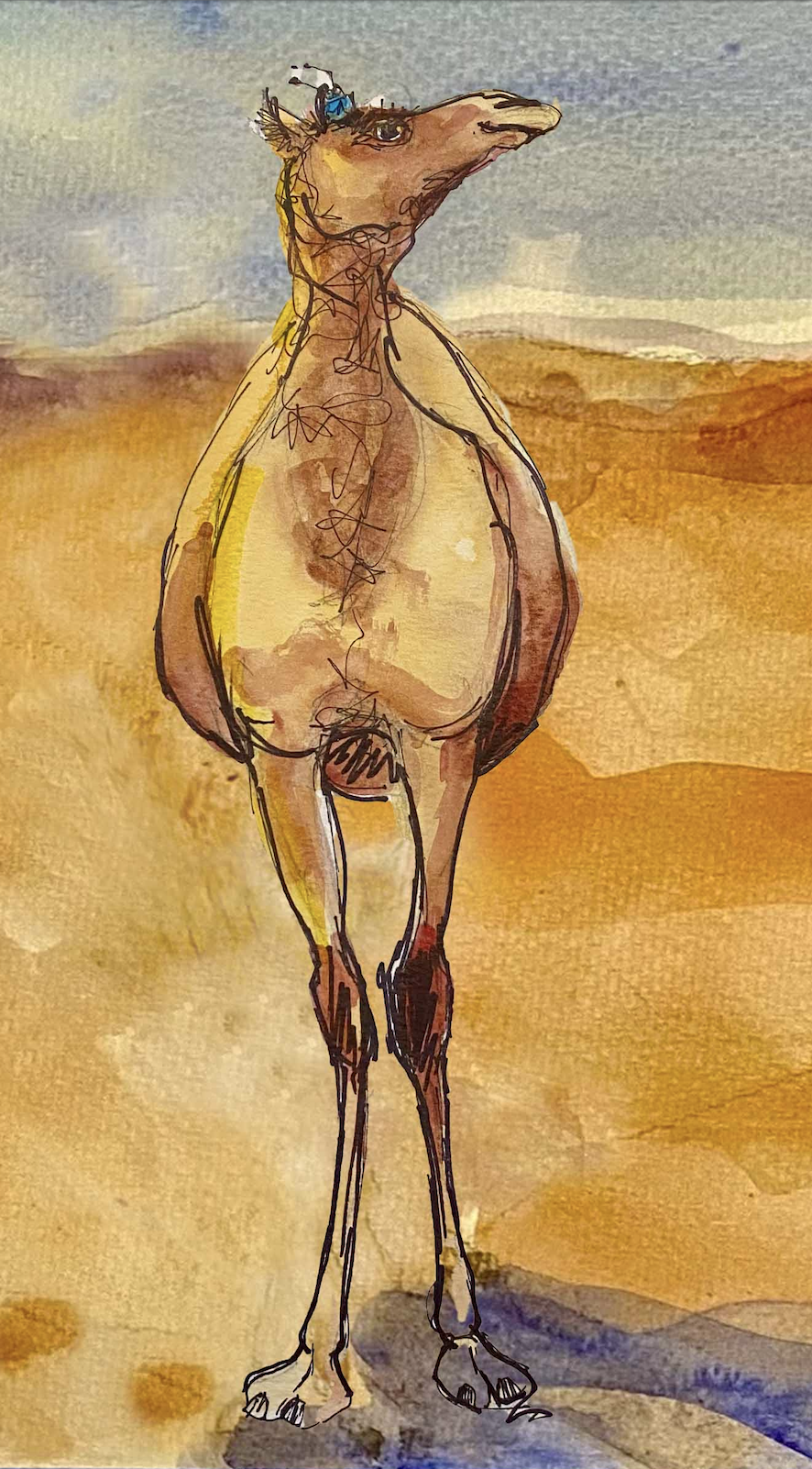
Neville, the star of my new picture book, NEVILLE’S OASIS, is a one-humped camel weighing somewhere between 850 and 1500 pounds, and he stands approximately 6-7 feet tall at the shoulder.
An interesting fact about camels (and one that is a curiosity since we tend to associate them with the desert landscapes of Central Asia, Africa, and the Middle East), is that the species called Camelops evolved in North America over 40 million years ago, roaming from the Pacific Coast to the Great Plains. Then 6-3 million years ago, those long legs carried them over the Bering Strait into Asia. In time they found their way to Africa and the Middle East. Another group headed south into South America becoming today’s alpacas and llamas. Then in a mass extinction event, Camelops disappeared from North America about 10 to 13 thousand years ago.
Bovines’ evolutionary story is much more complicated, though not nearly as old: evolving 2 million years ago in India, modern cattle evolved from Aurochs—large wild cattle that migrated into Europe, Asia, and North Africa before they were domesticated approximately 11,000 years ago. Since then, many changes have occurred for modern cattle, which populate every continent and now number over 1000 breeds.
Despite differences in size and body shape, Molly and Neville share some commonalities: Both are classed as even-toed ungulates, which means the hooves on each foot are divided in the center. Being herbivores, they enjoy fresh grasses and plants but have the digestive systems to handle dry foliage as well. Neville can even eat thorny plants including cacti! These foods demand a lot of mastication, so Molly and Neville spend much of their time chewing their cuds. Neville has a three-chamber stomach compared to Molly’s four-chamber stomach.
Water consumption for both Molly and Neville is astounding. Molly can drink a bath-tub’s worth of water (between 30-50 gallons) per day, but Neville has her beat – he can gulp down over 30 gallons in just 13 minutes!
Graced with sharp vision and good senses of smell, camels and bovines have beautiful faces with long eye lashes. Both bovines and camels have two eye lids as well as a thin, translucent membrane that they voluntarily sweep across their eyeballs. Called a nictating membrane, it protects their eyes from wind, dirt, and sand.
Just like bovines, camels live in herds with the exception being that bovine herds are matriarchal while dromedaries live in patriarchal groups.
Highly protective, camels and bovines are good mothers within the boundaries of domestication. Weaned from milk between 1-2 years, baby camels stay close to their mothers for as long as 3-5 years during which they learn survival and social skills for life in the herd.
Bovine calves don’t get to stay with their moms much beyond 8 to 12 months in the case of the beef industry. But in that time, mothers are loving and fiercely protective of their calves. In the dairy industry, they are taken away from their moms in less than 24 hours. Beginning with intense grooming, in the time they do have with their mothers, deep bonds of affection are formed between the two and grief upon separation is significant.
Both bovines and camels are intelligent, social animals. While camels can be stubborn, they are also patient to the point of stoicism. Fiercely loyal to their handlers, they have strong memories and are able to follow complex commands. They can be sensitive and moody as well as bad-tempered, even sulky, and are famous for holding grudges. (And yes, spitting . . .) They are also inquisitive and can behave playfully. They make a variety of sounds from moaning to groaning. Oddly enough, while they can growl, they can also hum when in a good mood. Hmmm . . .
Bovines are likewise known to be curious. Emotional animals, they are capable of feeling and showing signs of joy, fear, anxiety, and empathy. Playful and able to learn, they like exploring and according to Psychology Today, can even become frustrated if they cannot solve a problem. Check it out:
Vocalizations that bovines use to communicate with one another range from a soft, soothing “mooing” to the sharper, lower-pitched “moo” the indicates irritation or distress. Calves bleat and bawl at a higher pitch.
Camels and bovines both engage in tail wagging but for different reasons. Camels will wag their tails when content or happy. Cows wag their tails primarily if irritated or to swat flies and other insects away. Occasionally, a rhythmic wag is an expression of contentment, and calves are often seen to wag their tails when nursing.
The biggest difference between the two species is, of course, that hump that sets the camel aside from every other mammal. But the idea that it is used for storing water is a myth. Instead, it stores up to 80 pounds of fat reserves that enable the animal to cope with harsh, dry environments and go for days without food or water.
In conclusion, bovines and dromedaries are extraordinary creatures. If you would like to read more about the personalities of camels, here’s a fun article that includes some great photos:
Check out this earlier blog I wrote about cows: